Heat Pump Flow Temperature — Getting the Setting Right in a Bristol Home
Last reviewed: 2 October 2026
Flow temperature — how hot the water leaving the heat pump is — has more effect on running costs than almost anything else. Here's what it means, what's realistic in Bristol's period homes, and how to tune it down safely.
What “flow temperature” means
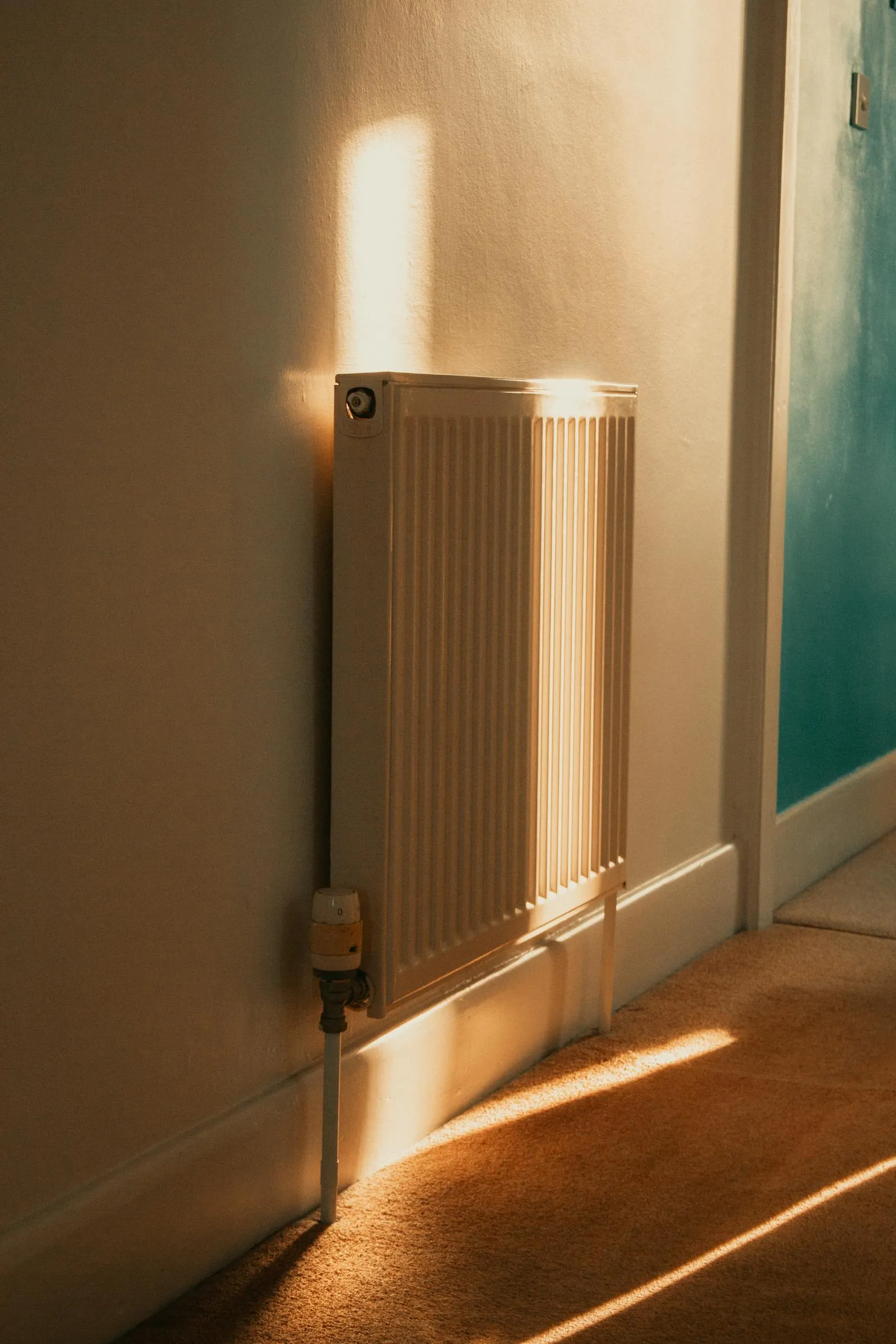
Flow temperature is the temperature of the water the heat pump sends out to your radiators. A gas boiler usually runs at 65–75°C. A heat pump is designed to run much cooler, typically 35–50°C, because every degree lower makes it more efficient.
Why it matters so much
A heat pump works harder to produce hot water than warm water. The gap between the outdoor air temperature and the water temperature it has to reach decides how much electricity it uses. Roughly:
| Design flow temperature | Typical seasonal efficiency (SCOP) | Yearly cost for 12,500 kWh of heat at ~26p/kWh |
|---|---|---|
| 35°C (underfloor heating) | 4.0+ | about £820 or less |
| 45°C | about 3.5 | about £940 |
| 50°C | about 3.2 | about £1,030 |
| 55°C | about 2.8 | about £1,175 |
Those are illustrative figures for a three-bedroom Bristol terrace, but the pattern holds everywhere: each 5°C cut is worth roughly 8–12% off the bill.
What’s realistic in Bristol homes
- Interwar semis and newer homes with cavity insulation often run happily at 40–45°C with few radiator changes.
- Victorian brick and Pennant-stone terraces usually target 45–50°C, with three to five radiators upsized to make that work.
- Large Georgian townhouses in Clifton or Kingsdown sometimes need 50–55°C, or an R290 heat pump that runs efficiently at higher temperatures, if upsizing every radiator isn’t practical.
Bristol’s mild winters help: on most winter days, the system needs far less than its design maximum.
Weather compensation: the automatic dial
A properly set-up heat pump doesn’t run at one fixed temperature. An outdoor sensor tells it how cold it is, and it follows a heating curve: warm water on a frosty morning, cooler water on a mild afternoon. On a typical 8°C Bristol day, a system designed for 45°C might only need to send water at about 35°C.
This is why heat pumps are best left running steadily. They’re quietly matching their output to the weather all the time.
Tuning it down safely
If your installer agrees, you can often lower the curve after the first winter:
- Wait for a cold spell so you’re testing in demanding conditions.
- Lower the curve a little — 1–2°C at a time, or one step on the controller.
- Live with it for a few days. If every room still reaches temperature, try another step.
- Stop when a room struggles, then go back one step.
- Keep radiator valves mostly open. Thermostatic valves turned low in most rooms force the heat pump to run hotter.
Avoid big overnight setbacks. Cooling the house down and reheating it quickly makes the heat pump run hot in the morning, undoing the benefit.
Bristol’s hard water and hot water temperature
Hot water is heated separately, usually to around 48–55°C. Bristol’s hard water scales the cylinder coil over time, which forces the heat pump to work harder to reach that temperature. A heat pump-rated coil and, where limescale is already a nuisance, a scale reducer protect efficiency.
Related: radiator sizing · SCOP and COP explained · running costs
See what a heat pump would look like in your Bristol home
The mechanism is the same in every UK home; the design is specific to yours. Our team carries out a free in-home survey including a full room-by-room heat-loss calculation, identifies the system size and configuration that fits your property, and provides a written quote with the £7,500 BUS grant already deducted.
You'll see the actual figure you'd pay — not an estimate — and the projected efficiency for your specific install.