What a Heat Pump Costs in Bristol in 2026, House Type by House Type
Last reviewed: 2 October 2026
Bristol's housing ranges from Georgian stone terraces to 1930s semis, and the heat pump price follows the house. Here is what drives the number up or down, what the £7,500 grant takes off, and what it costs to run at October 2026 prices.
The short answer
Most Bristol homeowners replacing a gas boiler with an air source heat pump get quotes somewhere between £8,000 and £14,000 before any grant. The national middle figure, taken from every installation paid for through the Boiler Upgrade Scheme in 2025/26, is £13,041. The government’s £7,500 grant comes straight off the invoice, so a typical Bristol household ends up paying roughly £500 to £6,500 of its own money.
Where your home lands inside that spread has much less to do with the brand of heat pump than with the building around it: how old the walls are, how big the radiators are, whether there is room for a hot water cylinder, and where the outdoor unit can sit.
Why Bristol quotes spread so widely
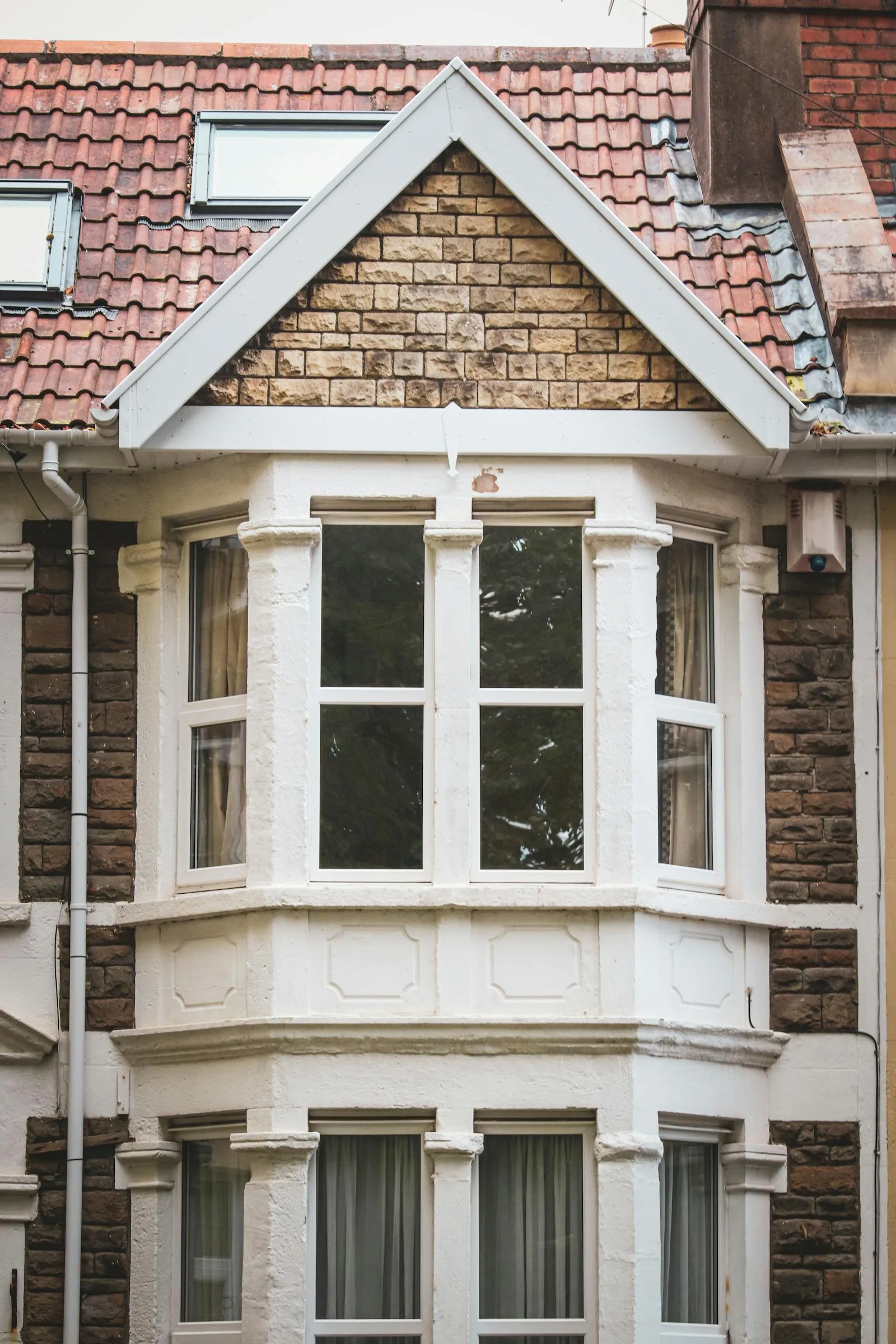
Bristol has one of the most varied housing mixes of any English city. Within a couple of miles of the centre you can find Georgian crescents in Clifton built from Bath stone, dense Victorian streets of Pennant sandstone in Cotham and Easton, red-brick bay-fronted terraces in Bedminster and Southville, interwar semis around Westbury-on-Trym and Henleaze, and large post-war estates on the northern edge.
A heat pump installer prices each of those very differently, because each has a different heat loss. The heat loss — how many kilowatts the house leaks on a cold day — sets the size of the heat pump, the size of every radiator, and the size of the cylinder. That calculation, done room by room during the survey, is what turns a national average into your quote.
Typical price bands by Bristol house type
These bands are our reading of the national price data applied to Bristol’s housing. They are a guide for budgeting, not a quote.
| House type | Where you find it | Typical gross price | After £7,500 grant |
|---|---|---|---|
| 1990s-onwards house or flat with cavity insulation | Infill across the city, Harbourside, newer estates | £8,000–£10,500 | £500–£3,000 |
| Interwar or post-war semi | Westbury-on-Trym, Henleaze, Horfield, Filton fringe | £9,500–£12,500 | £2,000–£5,000 |
| Victorian or Edwardian brick terrace | Bedminster, Southville, Bishopston, St Andrews | £10,500–£13,500 | £3,000–£6,000 |
| Solid stone terrace or townhouse | Clifton, Cotham, Kingsdown, Redland | £12,000–£15,000+ | £4,500–£7,500+ |
| Listed building or large detached villa | Sneyd Park, parts of Clifton and Long Ashton | Bespoke — survey needed | Bespoke |
The jump between the first and last rows is almost entirely building work around the heat pump, not the unit itself. A 7 kW outdoor unit costs much the same whether it sits behind a 2005 townhouse or a 1830 Clifton terrace.
The five things that move a Bristol quote
1. Solid walls
Most homes built in Bristol before about 1920 have solid walls — stone in Clifton, Cotham and Kingsdown, brick in Bedminster and Bishopston. Solid walls lose heat faster than cavity walls, so the house needs a bigger heat pump or, more often, bigger radiators. Insulating solid walls is expensive and in a conservation area often limited to internal insulation, so most installers design around the walls rather than wait for them to be insulated.
2. Radiators
A gas boiler sends water round the radiators at 65–75°C. A heat pump is most efficient at 45–55°C. At the lower temperature each radiator gives out less heat, so some rooms need larger or double-panel radiators. In a typical Bristol terrace that means upgrading three to five radiators, usually the front reception room, the largest bedroom and any room with two outside walls. Each upgrade adds a few hundred pounds including labour.
3. A hot water cylinder
Many Bristol terraces had their cylinders ripped out when combi boilers arrived. A heat pump needs a cylinder, typically 180–250 litres for a family home. Finding space for it — often in a bedroom cupboard or the loft — is one of the most common sources of extra cost and disruption in the city’s smaller terraces.
Bristol’s water is hard: the Bristol Water area is classed as moderately hard to very hard because the supply runs off limestone. Hard water leaves scale on the cylinder’s heating coil, so it is worth asking for a cylinder with a coil designed for heat pumps and, if you already have scale problems, a scale reducer on the incoming main.
4. Where the outdoor unit goes
Bristol’s hills and narrow rear lanes make siting a real cost factor. A unit that has to sit at the bottom of a terraced garden on a slope needs a longer pipe run, sometimes a concrete base built into the bank, and occasionally a crane or extra labour to get it there. Front-elevation siting in a conservation area usually needs planning permission (Bristol has 33 conservation areas covering about 30% of the city), which adds time and a planning fee.
5. Electrics
Most homes need only a dedicated circuit and an update to the consumer unit. Your installer notifies National Grid Electricity Distribution, the network operator for the South West, before the heat pump is connected. A supply upgrade is rare for a single domestic heat pump, but older properties with a 60 amp main fuse sometimes need one.
What the grant and tax rules take off
The £7,500 Boiler Upgrade Scheme grant is not means-tested. If you own your home (or rent it out privately), you are replacing a fossil-fuel or electric heating system, and you use an MCS-certified installer, you qualify. The installer applies to Ofgem and deducts the grant from your bill. You never handle the money.
Homes heated by oil or LPG — a handful of properties on the rural edge of Long Ashton and around Thornbury — can claim £9,000 for applications made from 21 July 2026 until 31 March 2027.
VAT is 0% on the supply and installation of a heat pump until March 2027, so the figures above already exclude VAT.
Low-income households may qualify for a fully funded installation through the Warm Homes: Local Grant, which Bristol City Council delivers through Bristol City Leap’s Bright Green Homes project. Eligibility depends on income and an EPC rating of D to G. Because median incomes in much of north and west Bristol sit above the national figure, fewer households there qualify than in some other cities, but it is worth checking before you pay for anything yourself.
What it costs to run in Bristol
Running cost depends on two numbers: how much heat your home needs in a year, and how efficiently the heat pump makes it.
Take a three-bedroom Victorian terrace in Bishopston that needs about 12,000 kWh of heat a year. At the October 2026 price cap (around 8p per kWh for gas, around 26p per kWh for electricity):
| Gas boiler (90% efficient) | Heat pump (seasonal efficiency 3.2) | |
|---|---|---|
| Fuel used | 13,300 kWh of gas | 3,750 kWh of electricity |
| Fuel cost | about £1,060 | about £990 |
| Gas standing charge | about £108 if you keep gas | £0 if you cap the gas supply |
On a standard tariff the saving is modest. It grows if you switch to a heat pump tariff with cheaper overnight or off-peak electricity, which can take 20–40% off the electricity figure, and if you remove the gas supply entirely and stop paying its standing charge.
Bristol’s climate helps. Filton, on the city’s northern edge, averages only around 33 days of air frost a year and a January overnight low of about 2.4°C — mild by English standards. A heat pump is most efficient when the air outside is not too cold, so Bristol homes tend to see good seasonal efficiency compared with homes further east or north.
Getting a figure for your own home
A fair Bristol quote should include:
- a room-by-room heat loss calculation (not a rule of thumb based on floor area)
- the list of radiators being replaced, with sizes
- the cylinder size and where it will go
- the outdoor unit position, with the noise calculation for your nearest neighbour
- whether planning permission or listed building consent is needed
- the £7,500 grant shown as a deduction
If two quotes for the same Bristol house differ by thousands of pounds, it is almost always because one includes radiator, cylinder or siting work that the other has left out. Our guide to hidden costs in a heat pump quote lists what to check line by line, and the payback period guide works through when the numbers come out ahead.
See what a heat pump would look like in your Bristol home
The mechanism is the same in every UK home; the design is specific to yours. Our team carries out a free in-home survey including a full room-by-room heat-loss calculation, identifies the system size and configuration that fits your property, and provides a written quote with the £7,500 BUS grant already deducted.
You'll see the actual figure you'd pay — not an estimate — and the projected efficiency for your specific install.